NDIS Music Therapy in Brisbane
Music Therapy to Support Your NDIS Goals
Music therapy is a powerful therapeutic support recognised under the NDIS to help you achieve your goals. Whether you’re working on communication skills, managing emotions, developing independence, or building social connections, our registered music therapists partner with you to create meaningful progress that enhances your quality of life.
Music Therapy Under the NDIS
What is the National Disability Insurance Scheme (NDIS)?
The National Disability Insurance Scheme (NDIS) is an initiative of the Australian Government, administered by the National Disability Insurance Agency (NDIA). It is a national system of disability support designed to enhance quality of life and increase economic and social participation for people with a permanent and significant disability in Australia.
Is music therapy recognised under the NDIS?
- Language and communication
- Personal care
- Mobility and movement
- Interpersonal interactions
- Community living
- Capacity Building – Improved Daily Living Skills – Therapeutic Supports
How Music Therapy Supports Your NDIS Goals
Music therapy is more than making music, it’s about using music as a therapeutic tool to help you develop skills, increase independence, and participate more fully in your community.
Communication, Speech & Language
- Develop speech and language skills
- Improve verbal and non-verbal communication
- Enhance social communication abilities
- Build confidence in self-expression
Emotional Regulation & Mental Health Support
- Learn strategies to manage anxiety and stress
- Develop emotional awareness and regulation
- Process feelings in a safe, supportive environment
- Build coping skills for challenging situations
Social Skills and Community Participation
- Practice turn-taking and cooperation
- Develop peer relationships and social connections
- Build confidence in group settings
- Enhance community engagement
Motor Skills and Physical Function
- Improve fine and gross motor coordination
- Develop movement control and body awareness
- Support rehabilitation for physical injuries
- Enhance functional movement patterns
Cognitive
Function
- Strengthen attention and focus
- Support memory and recall
- Develop problem-solving and decision-making skills
- Enhance executive functioning
Independence & Daily Living Skills
- Build self-care and life skills
- Increase independence in daily activities
- Develop organisational abilities
- Support transition to adulthood
How to Access Music Therapy Under the NDIS
Music therapy is provided as an allied health service, in the same way as speech therapy, occupational therapy, physiotherapy, and many others.
Check Your
NDIS Plan
Review your NDIS plan to see if you have funding under the category:
- Capacity Building – Improved Daily Living Skills - Therapeutic Supports
If you have funding under the category of individual therapeutic support, you may choose to use that funding or part of that funding for music therapy.
Speak With Your Support Coordinator
Talk to your support coordinator, local area coordinator (LAC), or plan manager about including music therapy in your supports. They can help you understand how music therapy aligns with your plan goals and how to access funding.
Contact
Musicgrace
Reach out to us directly. We'll discuss your needs, goals, and NDIS plan to determine how music therapy can support you. We can communicate with your support team to ensure everything is coordinated.
Begin Your Music Therapy Program
Once funding is confirmed, we'll conduct a comprehensive assessment and develop a personalised session plan aligned with your NDIS goals. Regular sessions begin, with ongoing progress monitoring and reporting.
Not sure if music therapy is right for you? We're happy to have a no-obligation conversation to discuss your needs and how we might help.
NDIS Participants We Support
Musicgrace provides NDIS music therapy services for participants of all ages with various disabilities and conditions, including:
- Autism Spectrum Disorder (ASD)
- Intellectual disability
- Cerebral Palsy
- Down syndrome
- Global Developmental Delay
- ADHD
- Acquired brain injury or traumatic brain injury
- Stroke
- Neurological conditions (Parkinson’s, Multiple Sclerosis)
- Mental health conditions (anxiety, depression, PTSD)
- Physical disabilities
- Sensory processing challenges
- Communication disorders
- Social-emotional difficulties
Every person is unique. We tailor our approach to your individual needs, abilities, and goals, no matter your diagnosis or background.
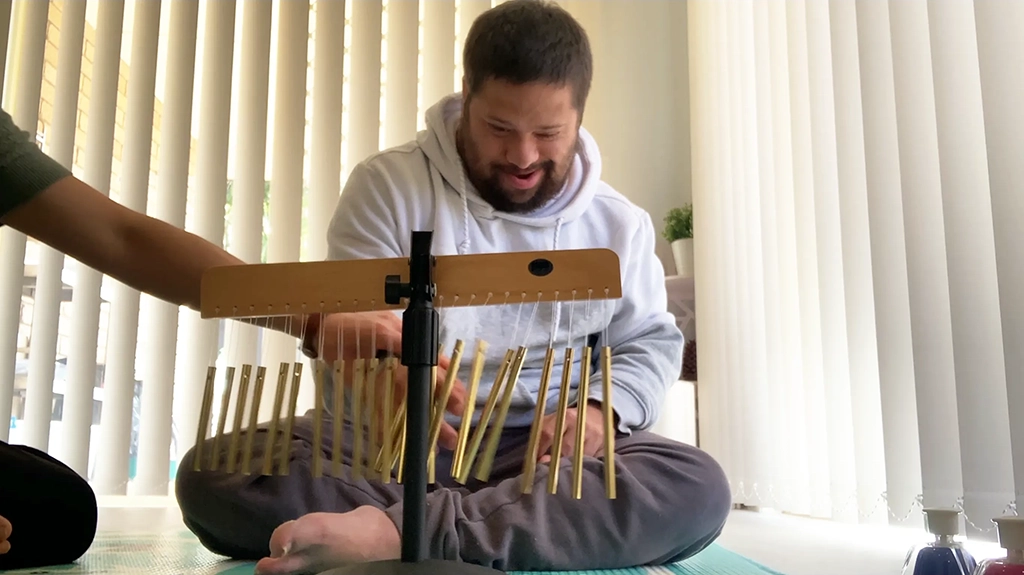
Music Therapy Session Options
Our registered music therapists have extensive experience supporting:
Individual Music Therapy Sessions
One-to-one sessions providing concentrated attention and personalised interventions. Sessions last 30-60 minutes depending on individual needs.
Group Music Therapy Sessions
Beneficial for social skill development, peer connection, and collaborative learning. Sessions run for one hour and can be conducted at disability service providers or community settings.
Why Choose Musicgrace for NDIS Music Therapy?
Registered
NDIS Provider
Musicgrace is a registered NDIS provider, ensuring you receive quality services that meet NDIS standards and can be funded through your plan.
Qualified Registered Music Therapists (RMTs)
All our therapists are registered with the Australian Music Therapy Association (AMTA) and have extensive experience working with NDIS participants across all age groups.
NDIS Progress Reports & Plan Review Support
We provide detailed assessment reports, progress reports, and documentation for NDIS reviews and plan renewals, making the funding process straightforward.
Experienced and Evidence-Based Practice
Since 2016, we’ve partnered with leading disability service providers across Southeast Queensland, helping countless NDIS participants achieve meaningful goals.
NDIS Music Therapy FAQs
How much does NDIS music therapy cost?
Music therapy costs are covered by your NDIS funding when it’s included in your plan. Our rates align with NDIS price guidelines. We’ll provide transparent pricing information when you contact us.
How long are sessions and how often should I have them?
Individual sessions typically last 30-60 minutes, while group sessions run for one hour. We generally recommend weekly sessions for consistent progress, though frequency can be adjusted based on your goals and plan funding.
Can my family be involved in sessions?
Absolutely. We encourage family involvement when appropriate. Family members can participate in sessions, observe, and learn strategies to support your goals at home.
What happens if music therapy isn't working for me?
We regularly review progress and adapt our approach. If music therapy isn’t the right fit, we’ll discuss this openly and can provide referrals to other appropriate allied health services.
Will I need to be able to play music or sing?
Not at all. No musical skills or experience are required. Music therapy is accessible to everyone, regardless of musical background or ability.
Next Steps to Begin NDIS Music Therapy
Music therapy can help you achieve your NDIS goals and live your best life. Let’s work together to create meaningful change through the power of music.