Aged Care Music Therapy in Brisbane
Music Therapy Supporting Wellbeing in Aged Care
Music has a remarkable ability to reach people at every stage of life, especially in older age. Our specialist aged care music therapy programmes enhance quality of life, preserve precious memories, and maintain cognitive function through therapeutic music experiences tailored for older Australians in residential care or at home.
Benefits of Music Therapy in Aged Care
Music therapy offers profound benefits for older Australians, providing meaningful engagement, emotional connection, and therapeutic support that honours each person’s life story and individuality.
Cognitive Stimulation and Dementia Support
- Stimulate long-term memory recall through familiar songs
- Support cognitive function and mental alertness
- Slow cognitive decline in dementia and Alzheimer’s
- Enhance orientation to time, place, and person
- Improve attention and concentration
Emotional Wellbeing & Mental Health
- Reduce symptoms of anxiety and depression
- Provide comfort and emotional expression
- Alleviate feelings of loneliness and isolation
- Enhance mood and overall sense of wellbeing
- Create opportunities for joy and positive experiences
Social Connection and Engagement
- Foster meaningful connections with others
- Combat social isolation through group participation
- Strengthen relationships with family and carers
- Create a sense of community and belonging
- Encourage active participation in residential life
Physical Function & Motor Skills
- Support movement and mobility through rhythmic exercises
- Maintain motor skills and coordination
- Encourage gentle physical activity
- Support rehabilitation after stroke or injury
- Reduce chronic pain perception
Improved Quality of Life for Residents
- Provide purposeful, enjoyable activities
- Honour personal history and cultural identity
- Support dignity and personhood
- Create moments of joy, laughter, and connection
- Enhance overall life satisfaction
Music Therapy for Residential Aged Care Homes
We partner with aged care facilities across Brisbane to deliver regular music therapy sessions that enrich the lives of residents and enhance the therapeutic environment of your facility.
Individual Music Therapy Sessions:
- One-to-one sessions for residents with specific therapeutic needs
- Personalised music experiences honouring individual preferences and life stories
- Ideal for residents with advanced dementia, palliative care needs, or those who prefer individual attention
- Sessions last 30-60 minutes
Group Music Therapy Sessions:
- Engaging group music therapy for social connection and community building
- Themed sessions incorporating singing, instrument playing, movement, and reminiscence
- Suitable for residents at various cognitive and physical ability levels
- Sessions run for one hour
- Can be tailored to specific resident groups (dementia-specific, higher functioning, etc.)
Support for Aged Care Homes:
- Flexible scheduling to integrate with your activities programme
- Sessions conducted in communal spaces, activity rooms, or residents’ rooms
- Collaboration with lifestyle coordinators, clinical staff, and families
- Regular progress reports and documentation
- Professional development and training for staff (optional)
Music Therapy for Older Adults at Home
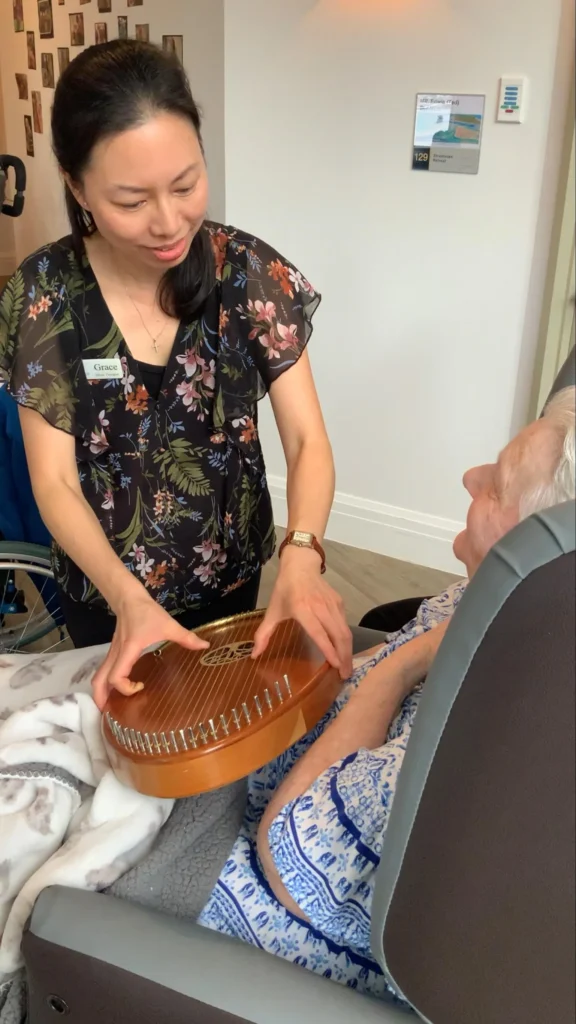
For older Australians receiving care at home, music therapy provides therapeutic support, cognitive stimulation, and meaningful engagement in the comfort and familiarity of home.
Music Therapy for Support at Home Recipients:
- Personalised music therapy in your own home
- Ideal for maintaining independence, managing dementia symptoms, supporting stroke recovery, or enhancing wellbeing
- Sessions last 30-60 minutes
- Flexible scheduling to suit your routine
Benefits of Home-Based Music Therapy:
- Maintain cognitive function and memory
- Reduce anxiety and agitation
- Provide meaningful activities and mental stimulation
- Support carers with strategies and respite
- Enhance quality of life while ageing at home
- Create joyful, purposeful moments in familiar surroundings
Music Therapy Support for Dementia and Alzheimer's Disease
Music therapy is particularly powerful for people living with dementia. Even when other forms of communication become difficult, music often remains accessible, providing a bridge to connection, memory, and self-expression.
How Music Therapy Helps with Dementia:
Memory Access and Preservation
Music can unlock memories thought to be lost, particularly long-term memories from younger years. Familiar songs often trigger reminiscence and allow people to reconnect with their personal history.
Reduced Agitation and Behavioural Symptoms
Music therapy can significantly reduce agitation, aggression, wandering, and other challenging behaviours associated with dementia, providing a calming and regulating influence.
Enhanced Communication
When verbal communication becomes limited, music offers alternative ways to express emotions, needs, and preferences. Singing, playing instruments, and responding to music facilitate meaningful interaction.
Improved Mood and Wellbeing
Music therapy reduces symptoms of depression and anxiety, creating moments of joy, pleasure, and emotional connection that enhance quality of life.
Maintained Identity and Dignity
Engaging with personally meaningful music supports sense of self, honours cultural identity, and upholds dignity throughout the dementia journey.
Evidence-Based Approach
Our aged care music therapy services are grounded in current research and best practices. Studies consistently demonstrate that music therapy:
- Improves cognitive function and memory recall in older adults
- Reduces symptoms of depression and anxiety
- Decreases agitation and challenging behaviours in dementia
- Enhances quality of life and life satisfaction
- Supports pain management
- Promotes social engagement and reduces isolation
We integrate evidence-based techniques including Neurologic Music Therapy® approaches specifically designed for cognitive and neurological rehabilitation in older adults.
What to Expect in Aged Care Music Therapy Sessions
Initial Assessment
We begin with a comprehensive assessment to understand the individual’s or group’s needs, abilities, preferences, health conditions, and life history. For residents with dementia, we gather information from family and staff about musical preferences and significant life experiences.
Personalised Music Selection
The music used in sessions is carefully selected based on personal preferences, cultural background, and therapeutic goals. We might incorporate:
- Songs from the person’s youth and significant life periods
- Music reflecting cultural heritage
- Religious or spiritual music if meaningful
- Classical, jazz, folk, popular music, whatever resonates
Therapeutic Interventions
Sessions may include:
- Singing familiar songs and hymns
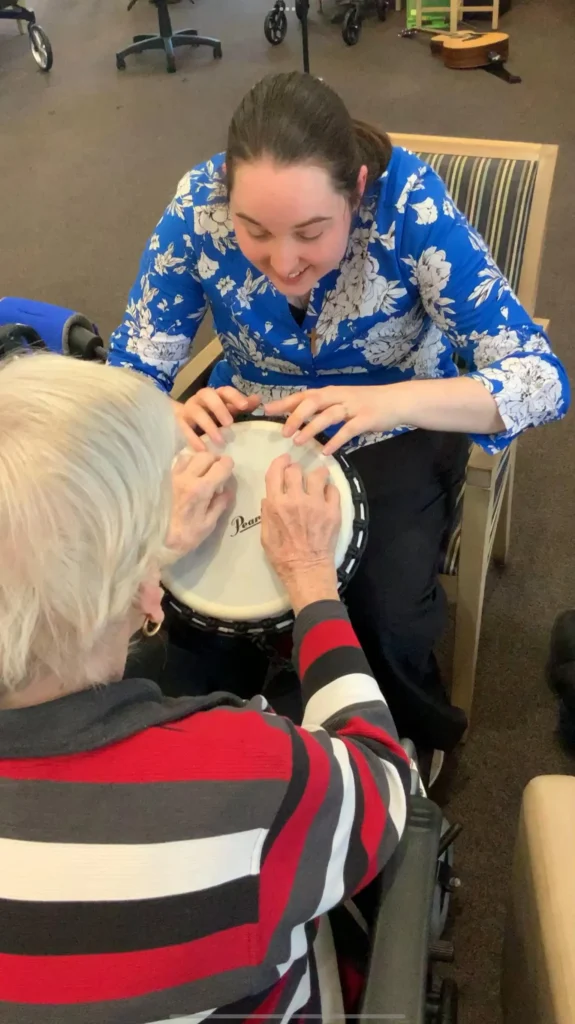
- Playing percussion instruments, keyboards, or other accessible instruments
- Music-assisted reminiscence and life review
- Movement to music (dancing, gentle exercises)
- Music listening for relaxation and mood regulation
- Songwriting or lyric discussion
- Music-facilitated social interaction
Progress Monitoring & Reporting
We continuously observe responses and adjust interventions to ensure sessions remain engaging, appropriate, and beneficial. Regular communication with facility staff, families, and healthcare teams ensures coordinated care.
Trusted by Leading Aged Care Providers
Since 2016, Musicgrace has partnered with respected aged care organisations across Southeast Queensland, including:





Our commitment to quality, person-centred care, and professional excellence has made us a trusted partner in aged care settings throughout Brisbane.
Funding Options for Aged Care Music Therapy
Funding in Residential Aged Care
Music therapy can be funded through:
- Facility activities and lifestyle budgets
- Diversional therapy allocations
- Allied health budgets
- Individual resident funding where applicable
We work with facilities to develop sustainable, cost-effective programmes that provide maximum benefit to residents.
Funding Through Support at Home
Music therapy is recognised as an allied health service and can be funded through Support at Home (Levels 1-8) when aligned with care plan goals such as:
- Maintaining cognitive function
- Supporting mental health and wellbeing
- Enhancing social participation
- Supporting chronic disease management
- Improving quality of life
We provide all necessary documentation and reporting for Support at Home compliance.
Why Choose Musicgrace for Aged Care Music Therapy?
Registered Music Therapists (RMT)
Our registered music therapists have extensive experience working with older adults, including those with dementia, stroke, Parkinson’s disease, and other age-related conditions. We understand the unique needs and preferences of older Australians.
Person-Centred Approach
We honour each person’s life story, cultural background, and individual preferences. Our therapy is never one-size-fits-all, it’s tailored to the unique individual or group.
Established and Trusted Since 2016
With partnerships across leading aged care facilities since 2016, we’ve demonstrated our commitment to quality, reliability, and meaningful outcomes for older Australians.
Professional Registration
All our therapists are registered with the Australian Music Therapy Association (AMTA) and many hold specialised training in Neurologic Music Therapy®.
Collaboration with Care Teams & Families
We work closely with lifestyle coordinators, nursing staff, allied health teams, and families to ensure music therapy integrates seamlessly with overall care plans.
Assessment and Reporting Support
From assessment through ongoing sessions to progress reporting, we provide complete, professional music therapy services that meet aged care quality standards.
Aged Care Music Therapy FAQs
Is music therapy suitable for residents with advanced dementia?
Yes. Music therapy is particularly beneficial for people with advanced dementia. Music often remains accessible even when other forms of communication and engagement are limited. We adapt our approach to meet each person where they are.
Do residents need musical experience or ability?
Not at all. Music therapy is accessible to everyone regardless of musical background, current abilities, or cognitive status. We adapt interventions to each person’s comfort and capacity.
How often should music therapy sessions occur?
For optimal benefit, we typically recommend weekly sessions. However, frequency can be adjusted based on facility budgets, resident needs, and programme goals.
Can family members participate in sessions?
Absolutely. We welcome and encourage family involvement when appropriate. Family participation can enhance therapeutic outcomes and provide meaningful shared experiences.
What if a resident becomes distressed during a session?
Our therapists are trained to recognise and respond sensitively to distress. We continuously monitor responses and adapt interventions immediately. If needed, we can discontinue the session and provide comfort through music or other means.
How do you choose music for residents with dementia?
We gather information from families, care staff, and resident records about musical preferences, significant life periods, and cultural background. We prioritise music from the person’s youth and young adulthood (typically ages 15-30), as these songs often hold the strongest memories.
Can music therapy reduce the need for medication?
While music therapy doesn’t replace medication, research shows it can reduce agitation, anxiety, and behavioural symptoms in dementia, potentially reducing reliance on psychotropic medications. We work with clinical teams to support overall care goals.
How do you measure the effectiveness of music therapy?
We use validated assessment tools, clinical observation, and feedback from residents (when possible), families, and staff. We monitor changes in mood, engagement, social interaction, cognitive function, and behavioural symptoms. Regular reports document progress and outcomes.
Bringing Joy, Connection, and Dignity Through Music
Music therapy enriches the lives of older Australians, honouring their stories, supporting their wellbeing, and creating moments of joy and connection. Let’s work together to enhance quality of life through the timeless power of music.