Recovering from a stroke can be a long and complex journey. Many individuals experience challenges with speech, movement, memory, and emotional wellbeing.
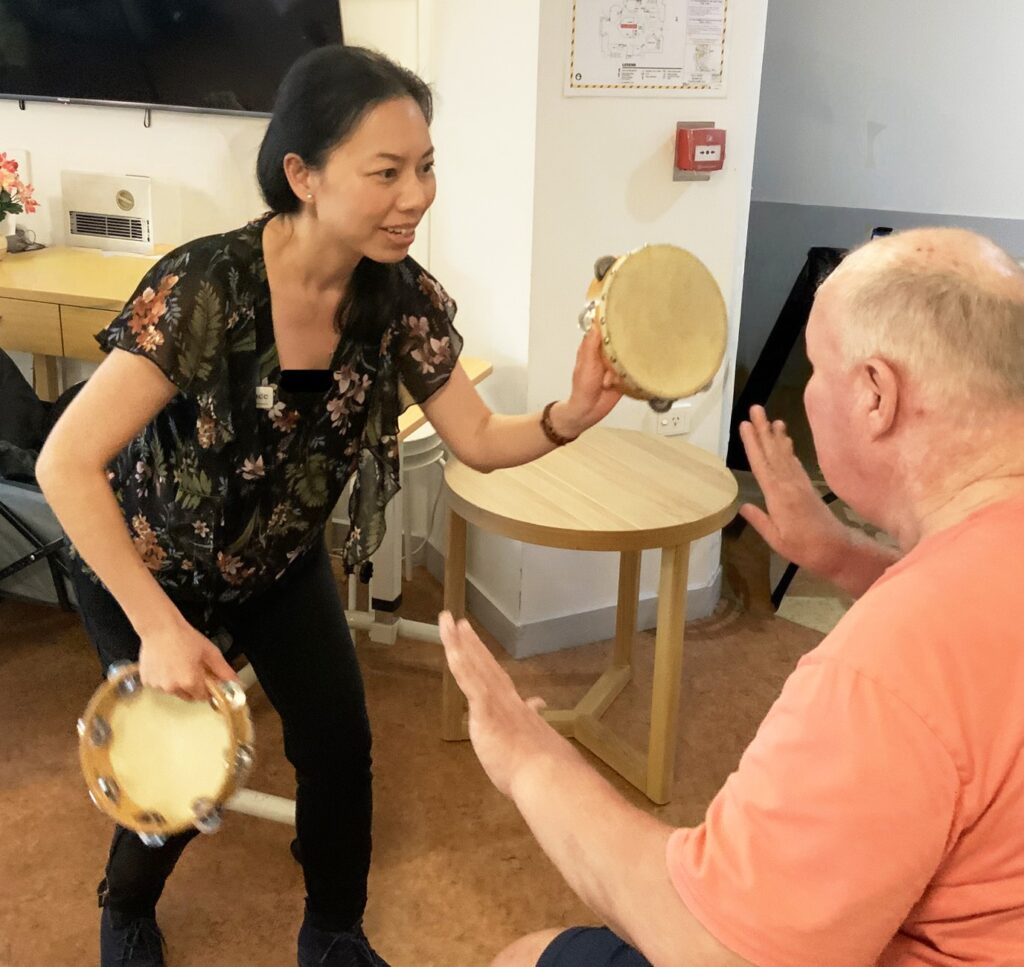
Music therapy is increasingly recognised as a powerful rehabilitation tool, helping stroke survivors regain lost skills and improve quality of life.
What Happens After a Stroke?
A stroke can affect different parts of the brain, leading to:
- Difficulty speaking (aphasia)
- Reduced mobility or coordination
- Memory and cognitive challenges
- Emotional changes such as anxiety or depression
Recovery depends on neuroplasticity—the brain’s ability to reorganise and form new connections.
How Music Therapy Helps the Brain Heal
Music activates multiple areas of the brain at once, including those involved in:
- Language
- Movement
- Emotion
- Memory
This makes it uniquely effective in stroke rehabilitation.
The NDIA recognises music therapy as an evidence-based therapeutic support when it leads to meaningful functional improvements
This makes it uniquely effective in stroke rehabilitation.
Key Music Therapy Techniques for Stroke Recovery
1. Melodic Intonation Therapy (MIT)
Used for individuals with speech loss (aphasia)
- Uses melody and rhythm to retrain speech
- Helps patients “sing” words before speaking them
- Activates alternative neural pathways
2. Rhythmic Auditory Stimulation (RAS)
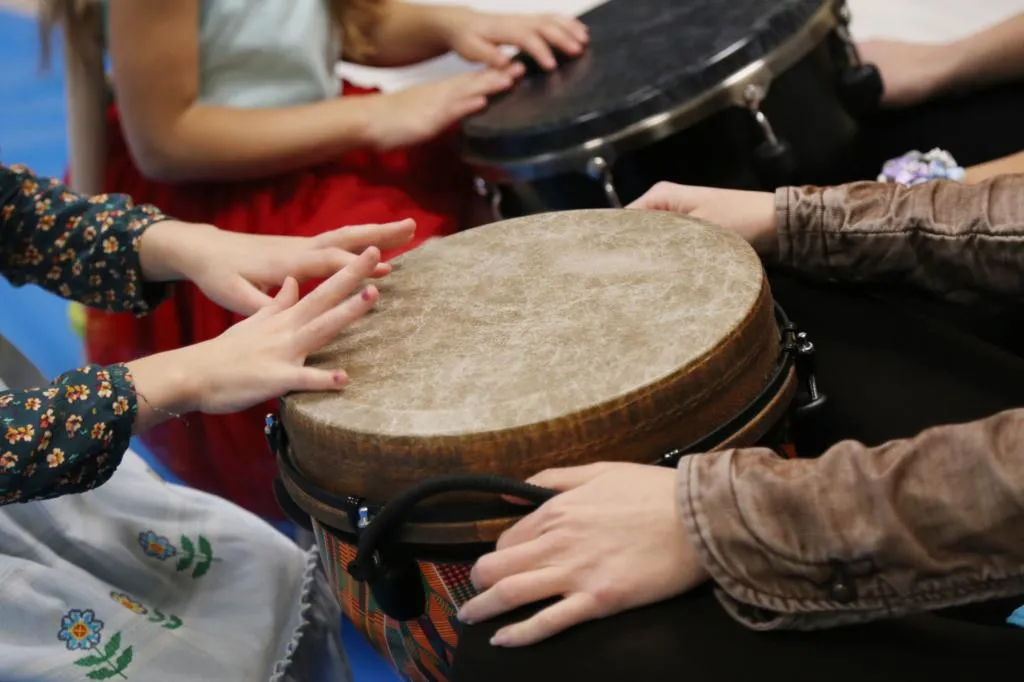
Used for movement and mobility
- Rhythmic beats help regulate walking patterns
- Improves gait, balance, and coordination
- Often used in neurological rehabilitation
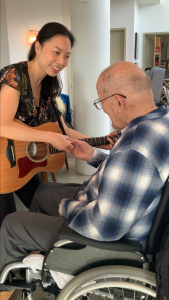
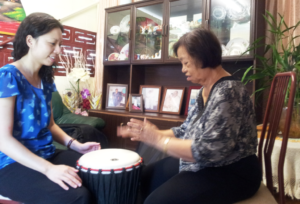
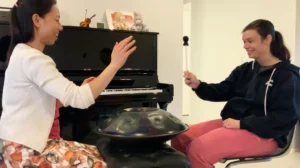
3. Therapeutic Instrument Play
Supports motor recovery
- Playing instruments improves fine and gross motor skills
- Encourages coordination and strength
- Builds confidence through achievement
4. Songwriting and Emotional Expression
Supports mental health recovery
- Helps process trauma and identity changes post-stroke
- Encourages emotional release
- Improves overall wellbeing
Benefits of Music Therapy After Stroke
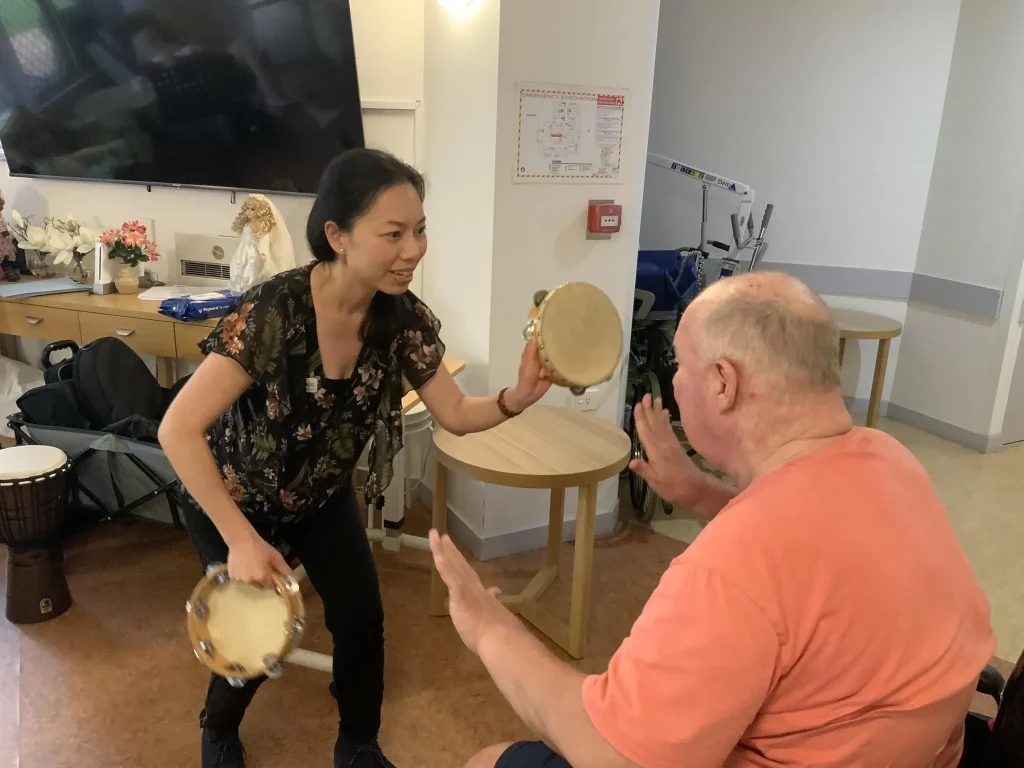
Research and clinical practice show improvements in:
- Speech and communication
- Walking and motor skills
- Cognitive function (attention, memory)
- Emotional wellbeing
Music therapy is particularly effective because it is:
✅ Engaging
✅ Non-invasive
✅ Adaptable to all ability levels
NDIS Funding for Stroke Rehabilitation
For eligible participants, music therapy can be funded under the NDIS when it:
- Addresses functional impairments
- Aligns with participant goals
- Is delivered by a registered therapist
This makes it a valuable addition to a multidisciplinary rehabilitation plan.
Who Can Benefit Most?
Music therapy is especially beneficial for stroke survivors who:
- Have difficulty with speech (aphasia)
- Experience reduced mobility or coordination
- Feel socially isolated or emotionally overwhelmed
- Respond well to music or rhythm
Real-Life Impact
Many stroke survivors find that music therapy helps them:
- Say their first words again
- Take confident steps independently
- Reconnect with loved ones
- Rediscover joy and identity
Why Choose Musicgrace for Stroke Recovery?
At Musicgrace, therapy programs are tailored to each individual’s:
- Neurological needs
- Recovery stage
- Personal music preferences
Sessions are designed to be both clinically effective and deeply motivating, helping clients rebuild skills while enjoying the process.
Final Thoughts
Music therapy is more than just listening to music—it’s a structured, evidence-based intervention that can transform stroke recovery.
Whether delivered individually or in shared sessions, it offers a holistic pathway to healing, supporting both physical and emotional rehabilitation.