A practical guide to using sound, breath and attention to support calm, reflection and everyday wellbeing.
Many adults are looking for simple ways to slow down, manage stress and feel more connected to the present moment. Music and mindfulness can work well together because music gives the mind something clear to notice. Rather than trying to empty the mind, a person can focus on sound, rhythm, breath or the feeling created by a piece of music, making the practice feel more accessible, especially for people who find silent meditation difficult.
A systematic review of wellbeing research found reliable evidence that music and singing support positive outcomes for adults, including reduced anxiety, enhanced mood and improved coping. A steady rhythm may help breathing slow down. A familiar song may bring comfort. Gentle instrumental music may provide a calm background for noticing thoughts without becoming caught in them. At Musicgrace, music-based wellbeing support can be adapted for adults, groups and home settings, depending on individual goals and preferences.
Why Music and Mindfulness Can Support Wellbeing
Mindfulness is the practice of paying attention to the present moment with openness and care. Music supports this process because it unfolds over time, you can notice one sound, then another, hear when the music becomes louder, softer, faster or slower, and feel how your breathing, body and emotions respond. This gives the mind a gentle anchor.
Music and mindfulness may be useful for adults who feel busy, tense, overwhelmed or disconnected from their own needs. Mindful listening can create a short pause in the day. Singing or humming can bring attention to breath and vibration. Slow rhythmic movement can help a person reconnect with the body. These practices don’t need to be complicated to be helpful, even a few minutes of intentional listening can create a sense of space.
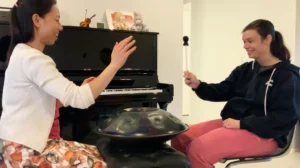
In a music therapy or community music setting, a facilitator can guide participants through safe and supportive activities, which might include listening, breathing, gentle voice work, lyric reflection, drumming or group music making. The focus is not musical performance, but awareness, connection and wellbeing.

Mindful Listening as a Simple Starting Point
Mindful listening is one of the easiest ways to begin. Choose a piece of music that feels calming, steady or meaningful, sit comfortably, take a few natural breaths and allow the music to become the main focus. Notice the first sound you hear, then the rhythm, melody, silence, instruments or voice. If thoughts come up, gently return attention to the sound, there’s no need to judge whether you’re doing it correctly.
This activity can be adapted to suit different needs. Some people prefer soft instrumental music; others feel grounded by familiar songs, nature sounds or gentle drumming. The key is to choose music that supports the intended state. If the goal is rest, avoid music that feels too stimulating. If the goal is emotional expression, a song with meaningful lyrics may be more suitable.
Mindful listening can also help people notice emotions. A person might ask: what does this music bring up for me? Where do I feel it in my body? What do I need right now? These questions can support reflection without needing a long conversation.
Using Music and Mindfulness in Everyday Routines
Wellbeing practices are often more useful when they fit into real life. Music and mindfulness can be included in ordinary routines without needing a long session, listening mindfully to one song before starting work, using slow breathing with music before bed, humming gently while preparing for the day, or playing calming music during a quiet afternoon reset.
The best routine is one that’s realistic. For some adults, this may be three minutes of listening in the car before going inside. For others, it may be a longer guided session at home or in a group. Music can also mark transitions: a calming playlist might signal the end of the workday, a reflective song might support journalling, and a steady rhythm might help with gentle stretching or walking.
Practical Activities to Try
One activity is the “one song pause”: choose a song, put away other distractions, and listen from beginning to end, noticing three things, the sounds you hear, the way your body feels, and any emotion that appears. Another is breathing with a steady beat: play music with a slow, even rhythm and allow your breath to settle naturally, without forcing deep breaths, simply returning to the rhythm when the mind wanders.
Humming can also be a gentle mindful activity. Choose a comfortable pitch and hum softly for a few breaths, noticing vibration in the lips, face, chest or throat. Lyric reflection is another option, listen to a song with meaningful words, write down one line that stands out, and ask what it connects to in your life.
For groups, shared music-making can support mindfulness through listening and response. Participants might play simple rhythms, follow a leader, pause together or notice how the group sound changes, building awareness while also supporting social connection.

When Guided Support May Be Helpful
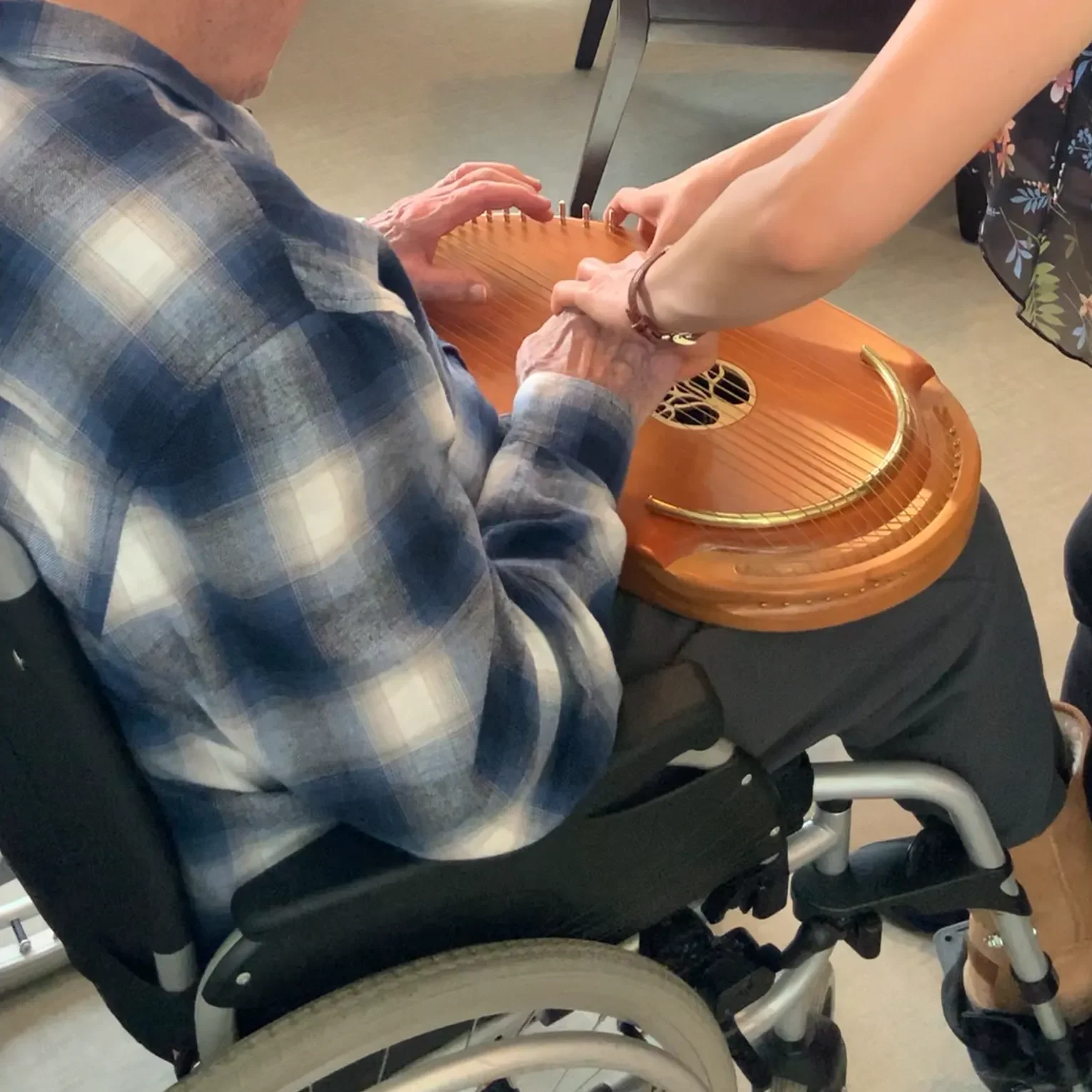
Many people can use music and mindfulness independently, but guided support may help when stress, anxiety, grief, low mood, loneliness or health changes make it hard to begin. A registered music therapist or trained facilitator can create a safe structure, choose suitable activities and adjust the pace, especially important when music brings up strong memories or emotions.
Guided support can help people use music in a way that feels steady rather than overwhelming, whether the focus is relaxation, emotional expression, connection, confidence, routine building or social participation. For adults who feel isolated, community music programs may offer an approachable way to connect with others while taking part in meaningful music-making. For older Australians receiving government-funded aged care, music-based wellbeing support may also be available through Support at Home.
Musicgrace offers music therapy and community music options that can support a range of wellbeing goals. The right pathway depends on each person’s needs, preferences and support context. These practices aren’t quick fixes, but they can become practical tools for creating calm, awareness and connection in everyday life. If you’d like to talk through which option might suit you, contact Musicgrace for a no-obligation conversation.