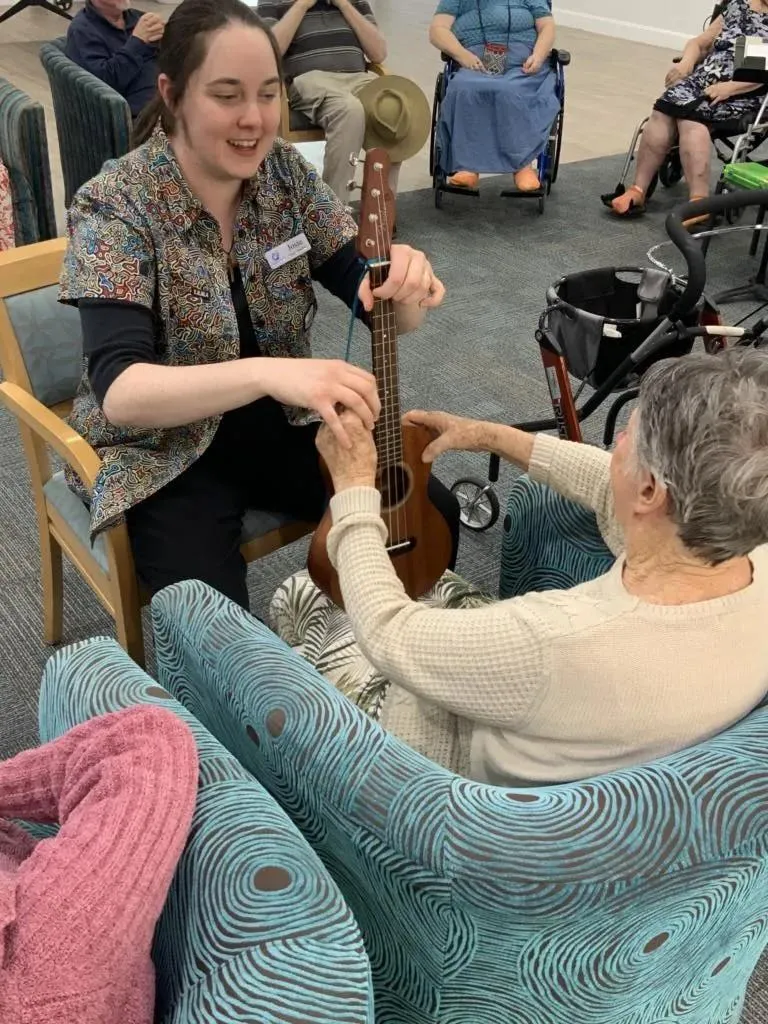
A practical guide to helping children build confidence, turn-taking and connection through shared musical experiences.
Social skills can be hard for some children to practise through words alone. A child might want to join in but feel unsure how to start. Another might enjoy being near others but need extra support with waiting, turn-taking, shared attention or reading social cues. Music gives children a different way to connect, a clear structure, a shared focus and a gentle reason to respond to another person.
For autistic children and children with developmental delays, music therapy for social skills can make social learning feel more natural. The goal isn’t to make every child interact in the same way; it’s to support each child’s own way of connecting, communicating and taking part. A child might copy a drum beat, choose a song, pause for another person, smile during a shared rhythm or use a sound to show they want more, small moments that can become meaningful steps towards social confidence.
How Music Therapy for Social Skills Builds Interaction
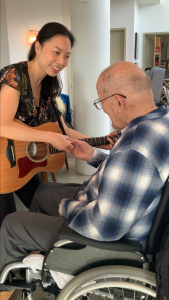
Music therapy for social skills uses rhythm, songs, instruments and musical play to create opportunities for interaction. Instead of asking a child to speak or perform on command, a registered music therapist can use music to invite a response. A simple rhythm can become a turn-taking game. A familiar song can become a shared routine. A musical pause can give the child a chance to vocalise, gesture, look, move or choose what happens next.
This approach helps because music is predictable but flexible. Many children feel safer when they know what’s coming next, and a repeated song or beat can help them understand the pattern of an activity, while the therapist still adjusts the pace, volume and level of support. Over time, the child may begin to notice another person’s actions, wait for their turn, copy sounds or movements, and enjoy being part of a shared experience.
Why Shared Music Can Feel Easier Than Direct Conversation
Direct conversation can feel demanding for some children, fast changes, unclear expectations, eye contact, speech, listening and social timing, all at once. Music can ease some of that pressure. A child can join in by tapping, humming, moving, holding an instrument, making a choice or listening closely, which means they can take part before they’re ready to use spoken language in a social setting.
Music also gives the therapist a way to follow the child’s lead. If a child repeats a sound, the therapist can turn it into a musical idea. If a child taps the table, that rhythm can become the beginning of a shared pattern. If a child shows interest in one instrument, the therapist can use that interest to encourage waiting, requesting, responding and joint play, helping social learning feel respectful and genuinely child-led.
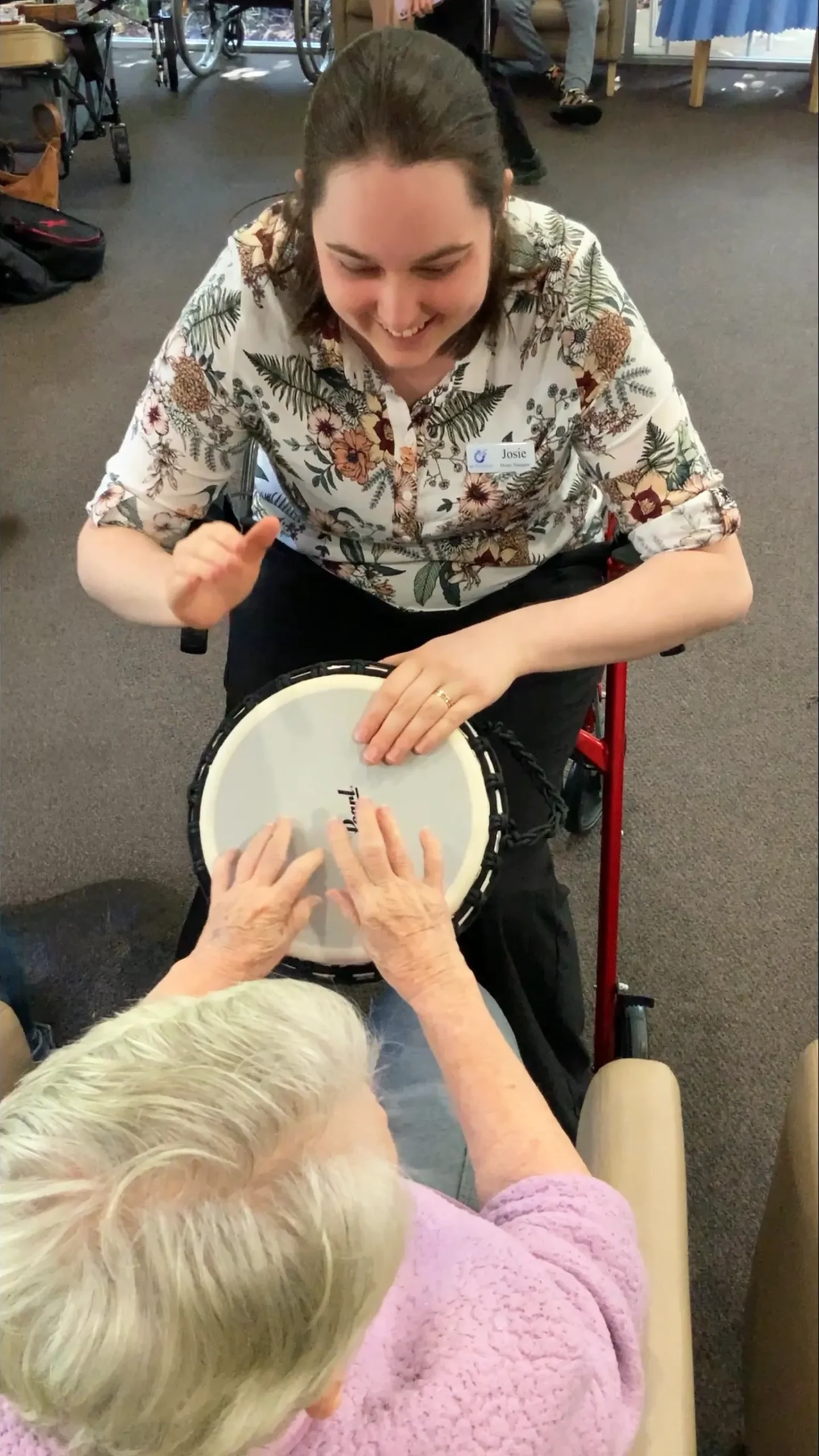
Supporting Turn-Taking, Waiting and Shared Attention
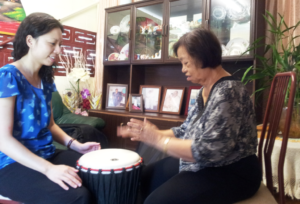
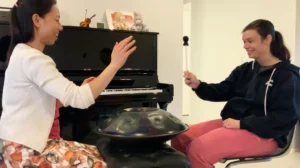
Turn-taking is one of the most useful social skills that can be practised through music. A therapist might play a short pattern on a drum, then pause and invite the child to answer. The child may copy the pattern, create their own response, or simply wait for the next turn, moments that support listening, attention, timing and awareness of another person.
Shared attention can develop through musical routines too. The therapist and child might look towards the same instrument, listen for the same cue, or wait for the same final note in a song. This doesn’t need to be forced; it can happen through enjoyment, curiosity and repetition. Australia’s Raising Children Network notes that practising turn-taking and back-and-forth interaction during play is one of the most useful ways to help autistic children build social skills, and when children experience success in small musical exchanges like these, they may become more willing to participate in other social activities.
How Families Can Continue Social Music at Home
Families can support social skills through simple music activities at home, without needing formal training. Singing a favourite song together, taking turns with a shaker, copying each other’s claps, or dancing to a familiar track can all support interaction. The key is to slow the activity down and allow space for the child to respond.
Parents and caregivers can also use musical choices to encourage communication, asking whether the child wants a fast song or a slow song, a drum or a bell, a loud sound or a quiet sound. Any clear response can be acknowledged as communication. These activities work best when they’re playful rather than pressured, and a few minutes of shared music each day can help build a child’s confidence, especially when the same routines are used often.
When Music Therapy May Be Helpful
Music therapy may help when a child is working on social communication, confidence, emotional regulation, waiting, shared play or participation. It can also support NDIS goals related to social skills, communication and community involvement, with sessions tailored to each child’s needs, interests and sensory preferences.
At Musicgrace, music therapy for social skills is designed to be goal-focused while still feeling warm and engaging. A therapist can work with families, support coordinators and other professionals to help each child build skills in a way that suits their development, with the focus always on meaningful participation rather than forcing a child into one narrow idea of social success. If your child is working on communication, interaction or confidence, contact Musicgrace to talk through how NDIS music therapy could be shaped around their goals, or explore our community music programs for group-based options.