Gentle ways music can help children recognise feelings, settle their bodies and feel supported during big emotions.
Young children are still learning how to understand feelings, manage frustration and recover after big emotional moments. Some children need extra support because they become overwhelmed quickly, find transitions hard, struggle with sensory input or have difficulty using words to explain what they need. Music can offer a practical and comforting way to support these early regulation skills.
Music therapy for emotional regulation uses sound, rhythm, movement and relationship to help children notice, express and settle their emotions. It doesn’t expect a child to be calm all the time. Instead, it gives them safe and repeated experiences of moving from high energy to lower energy, from frustration to connection, or from uncertainty to routine. These experiences can be especially useful for children with developmental delays, autism, sensory needs or communication challenges.
How Music Therapy for Emotional Regulation Supports Early Development
Music therapy for emotional regulation can support children by creating predictable, responsive and enjoyable activities. A therapist might use a steady beat to help a child organise their body, a soft song to support calming, or a movement activity to release energy before sitting or listening. Because music can be adjusted in the moment, the therapist can respond to the child’s state rather than forcing one activity to fit every situation.
This matters because emotional regulation isn’t just about behaviour, it’s connected to attention, communication, sensory processing, sleep, play and relationships. When a child feels more settled, they may have more capacity to listen, make choices, use words, join a routine or connect with another person. Music gives children a way to practise these skills through play, not pressure.
Helping Children Build Emotional Vocabulary and Express Feelings
Some children find it hard to explain what they feel. They may cry, shout, withdraw, run away or use behaviour to show that something is too much. Music can help by giving feelings a sound, rhythm or movement. A loud drum beat might represent anger. A slow rocking song might represent tiredness. A bright melody might help a child notice joy or excitement. It also offers a safe way to explore emotions through sound and movement.
A therapist can use songs about feelings, songwriting, improvisation or instrument choices to help children connect emotions with words and body sensations. For example, a child might choose a fast instrument when they feel excited or a soft sound when they feel worried. These choices can help adults understand the child’s inner world, support emotional expression and help children build emotional vocabulary, even when spoken language is limited.

Using Rhythm and Soothing Music to Support Calming and Predictability
Rhythm can be helpful for children who need support to regulate emotions during change, because it provides external structure for managing transitions. Repeated exposure to familiar rhythms and songs can show what is happening now and what will happen next, which can make transitions easier, moving from play to pack-up time, starting a therapy session, leaving the house or preparing for rest.
A therapist may use the same greeting song, movement song or closing song each session. Over time, the child begins to recognise these musical cues, which can reduce uncertainty and help the child feel more secure within a structured environment. Australia’s Raising Children Network notes that helping children develop emotional language and predictable strategies for managing feelings is a key part of supporting this skill, and at home, families can use similar musical routines during common pressure points like getting dressed, bath time or bedtime.
Practical Music Ideas for Families
A calming playlist can be used during quiet time, but it’s often more helpful when paired with a predictable routine; a parent might dim the room, sit with the child, and use soothing music or nature sounds to ease emotional responses. For children who need movement before settling, a short action song or rhythmic drumming activity may help them release energy first, with energetic songs helping children let out extra energy before they calm their bodies.
Call-and-response songs can also support regulation because they give the child a clear structure. The adult sings or plays a short phrase, then waits for the child to answer, the response might be a sound, clap, word, movement or look, which supports turn-taking and self-expression. The child learns that their response matters, and the adult can gently shape the activity to support self-awareness, with these shared exchanges often working well in group settings too.
Working With a Registered Music Therapist
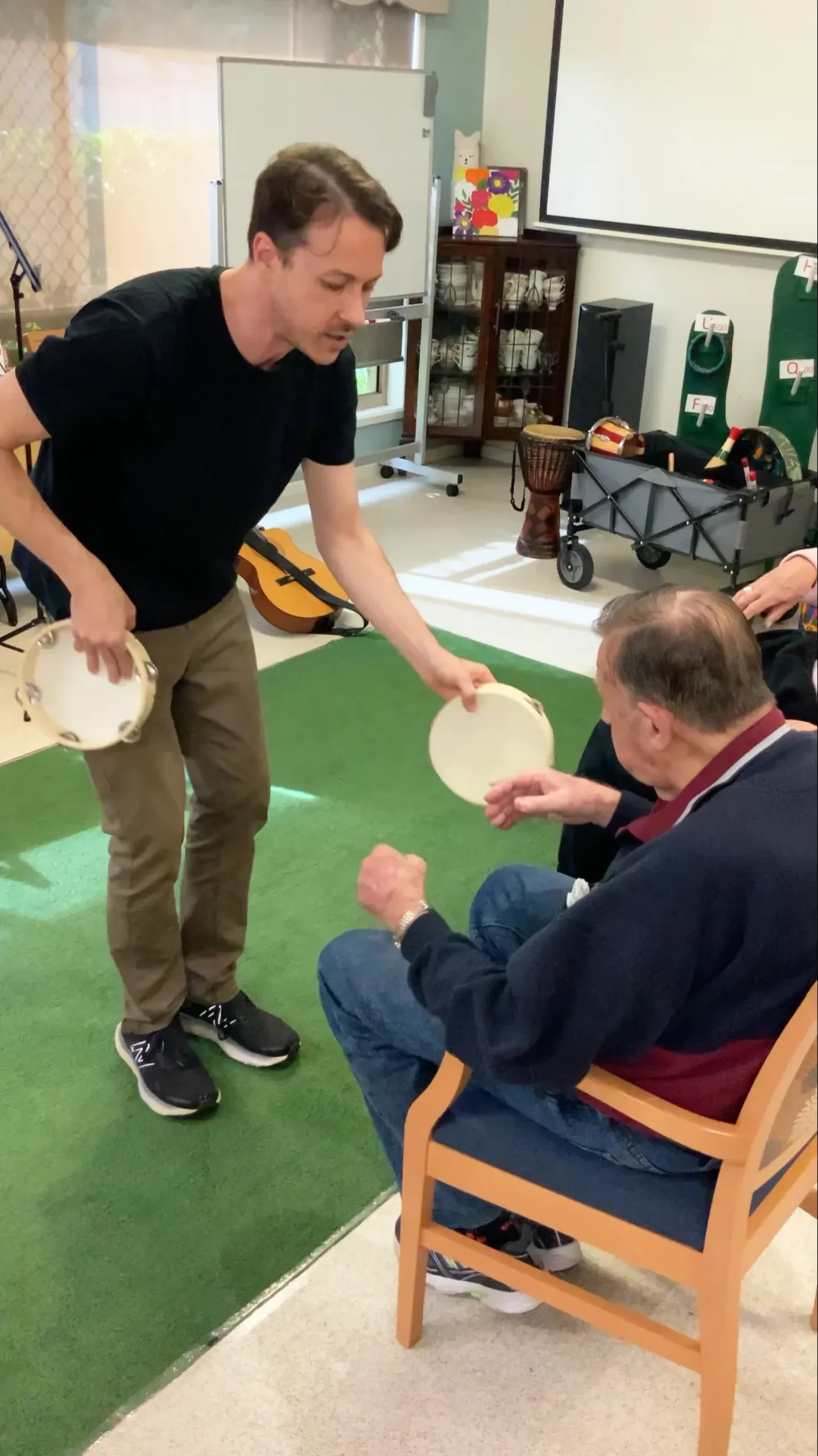
A registered music therapist uses evidence-based interventions tailored to the child to help families understand what type of musical support is most helpful. Some preschool-aged children need more movement before they can settle; others need lower volume, fewer choices or slower transitions. The therapist can observe how the child responds and then shape activities that match their communication style, sensory needs and family routines, which can make strategies easier to carry into the home, childcare or community settings.
When to Seek Extra Support
All young children have big feelings, but extra support may be helpful if emotional distress is affecting daily life, communication, relationships or participation. Music therapy can complement talk therapy and other allied health services when addressing anxiety or other emotional challenges.
At Musicgrace, sessions can be shaped around a child’s emotional regulation goals, sensory needs and communication style. For some families, NDIS Music Therapy may support goals such as building coping skills, increasing participation, improving transitions or helping a child express needs more clearly through tailored music interventions. If you’d like to talk through whether this could help your child, contact Musicgrace for a no-obligation conversation, or browse our music therapy FAQs for more on what sessions involve.