
A practical overview for families, carers and participants exploring music therapy for acquired brain injury.
Music therapy for acquired brain injury is an established intervention for individuals who have experienced changes in speech, movement, thinking, memory, mood, energy or daily routines following brain injury. This article provides an overview of what families, carers and participants can expect from music therapy after acquired brain injury, including how sessions are structured, the types of goals addressed, the evidence behind it, and how therapy adapts to changing needs.
Music therapy matters because it engages multiple brain regions at once, using structured musical activities to support recovery and daily life. It isn’t about musical performance, but about using rhythm, voice, listening, movement and familiar music to support brain functions involved in movement, speech, emotion and sensory processing.
How Music Therapy Works for Acquired Brain Injury
Music therapy engages multiple brain regions simultaneously, which is part of why it can be a useful tool for rehabilitation. Structured musical activities can help stimulate the neural pathways involved in movement, communication and cognitive skills. By integrating music into therapy, individuals can work towards real-life outcomes in a way that’s motivating and personally meaningful.
Evidence-Based Benefits of Music Therapy for Acquired Brain Injury
Research into music therapy for acquired brain injury, particularly stroke, has produced a growing body of evidence. A 2019 systematic review and meta-analysis published in Scientific Reports found that rhythmic auditory cueing training improved gait velocity, stride length and cadence in stroke survivors, with stronger effects when training was combined with regular practice rather than a single session. Other published meta-analyses of rhythmic auditory stimulation have reported similar improvements in gait velocity and stride length for people recovering from stroke and other neurological conditions.
Beyond movement, published reviews have found that music therapy can support emotional recovery, mood and quality of life after stroke, and that techniques such as melodic intonation therapy can support functional communication and speech recovery for people with post-stroke aphasia. A broader systematic review of music therapy’s psychological outcomes in neurological conditions also found support for improvements in mood, motivation and engagement with rehabilitation more generally.
These benefits are supported by published systematic reviews and clinical research, though the strength of evidence varies by outcome, and researchers continue to call for more high-quality randomised controlled trials in this area.
Starting With the Person’s Goals
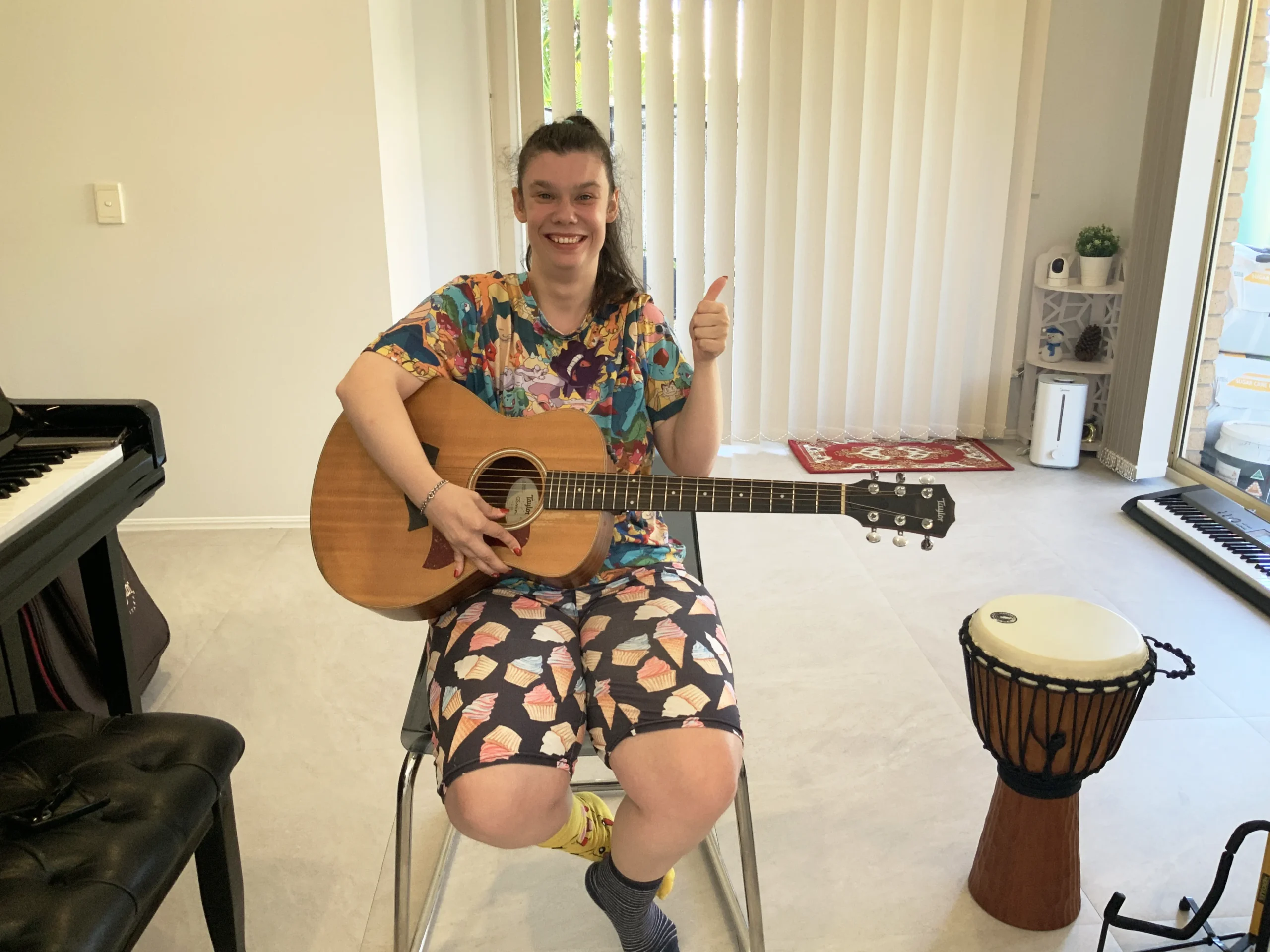
Music therapy usually begins by understanding the person, not just the injury. A therapist may ask about communication needs, movement changes, cognitive concerns, fatigue, emotional wellbeing, music preferences and current support. Family members, carers or support coordinators may also help explain what daily life looks like and what goals matter most.
Goals may include speaking more clearly, using the voice with confidence, improving attention and supporting cognitive functioning, practising coordinated movement, supporting memory, managing frustration, increasing social participation, reconnecting with a favourite song or activity, and building stamina and engagement. The therapist uses this information to plan sessions that feel purposeful and respectful.
What a Session May Include
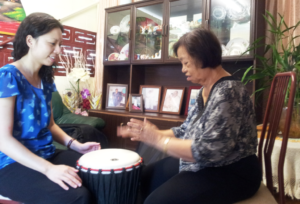
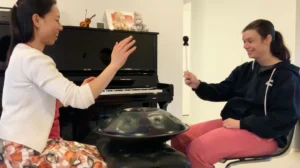
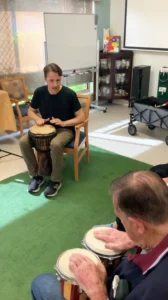
A music therapy session for acquired brain injury may include a variety of activities depending on the person’s needs and comfort level, singing, rhythm activities, music listening, composing music, or playing musical instruments.
A person working on speech may practise short sung phrases, breath control, or call-and-response vocal patterns. For movement goals, sessions may include rhythm-based exercises for repetitive arm movements, rhythmic auditory cues to support timing and coordination, or beat-based activities to help organise movement. To support cognitive goals, music therapy may involve using familiar songs to prompt recall, structured rhythms to practise focus, or simple musical tasks that require following steps, sequencing and planning. If emotional wellbeing is a priority, sessions may include songwriting or playlist work to express frustration, grief, hope or identity changes, or melodic intonation therapy for speech repetition in people with communication needs.
Why Music Can Support Engagement After Injury
After brain injury, therapy can feel tiring and repetitive. Music brings structure, motivation and personal meaning into the session, making participation more engaging. A familiar song may support memory and emotional connection, while a steady beat can help organise movement work.
A shared musical task may encourage attention and interaction without relying only on conversation. Even small responses, such as tapping in time, choosing a song, completing a phrase, or staying engaged for a few extra minutes, can build confidence and provide a positive experience of participation. For many families, seeing their loved one respond to music can also feel encouraging.
Working Alongside Other Supports
Music therapy for acquired brain injury is most effective when integrated within a broader support plan. It may be provided in hospital or community settings alongside physiotherapy, occupational therapy, speech pathology, psychology, medical care and NDIS support. Each therapy has a different role, and music therapy should not replace clinical services needed for assessment, diagnosis or specialist rehabilitation. Good communication between providers helps keep therapy consistent, for example, if a speech pathologist is working on phrase length, the music therapist may design singing activities that support the same goal.
Supporting Daily Life Beyond the Session
One of the strengths of music therapy is its ability to connect with ordinary routines. Strategies can carry over beyond formal sessions, using rhythm to support movement practice during a transfer or walking task, singing a short song to help remember a sequence, or playing a playlist to support regulation before a demanding activity. These ideas should be simple enough for families or support workers to use safely when appropriate, and home carryover should never feel like extra pressure. The most useful strategies are usually short, repeatable and connected to the person’s real needs, and the therapist can help decide what’s suitable.
What Families Can Expect Over Time
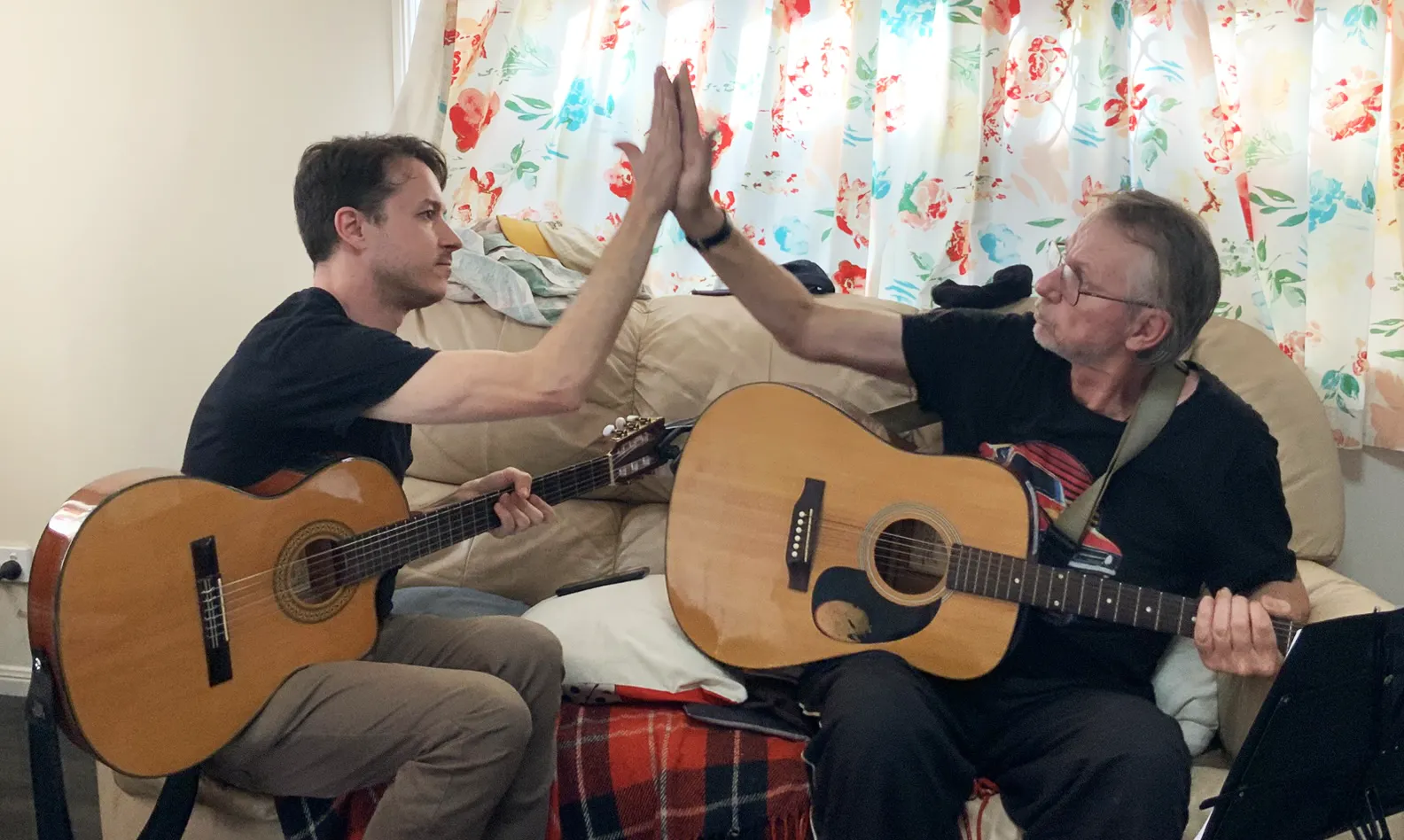
Progress after acquired brain injury can vary. Some people make steady gains, while others need long-term support to maintain skills and confidence, and music therapy should be reviewed regularly so goals remain relevant. Researchers continue to call for more high-quality randomised controlled trials in this area, as some current findings are based on a small number of studies or lower-quality evidence.
Individual progress varies from person to person, and sessions are adapted as the person’s energy, abilities and needs change, a person may have more energy on some days and very little on others, and mood, sleep, medication, pain and daily stress can all affect participation.
A session may shift between active and receptive work, using rhythm, movement or vocal work when energy allows, and, when appropriate, drawing on neurologic music therapy techniques. On a harder day, the session may focus on regulation, listening, gentle singing or emotional expression. This doesn’t mean the therapy has gone off track, it means the therapist is adjusting the pathway so the person can still participate safely and meaningfully.
At Musicgrace, the focus is on respectful, goal-based support that recognises the person beyond the injury. Sessions may support communication, movement, cognition, mood and participation, while also creating space for enjoyment, identity and connection. If you’d like to talk through whether music therapy could support your family’s recovery goals, contact Musicgrace for a no-obligation conversation.